How is hydrogen made?
Hydrogen is made in a process known as electrolysis
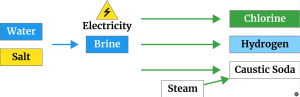
which also produces chlorine and caustic as co-products. Electrolysis is a chemical process which uses electricity to split salt and water into chlorine, caustic and hydrogen. This takes place in an electrolyser. An electrolyser is made up of a positive electrode (or anode) and a negative electrode (or cathode). These electrodes are sat in salt water with the two electrodes being separated by a semi-permeable ‘barrier’ (also known as a membrane or a diaphragm). This barrier keeps the hydrogen safely separate from the chlorine.
Europe makes around 2.5 million cubic metres of hydrogen each year and you can find out more about European production of Chlor-Alkali here